
Where the Wild Things Grow
By John Tompkins and Scott Turnbough
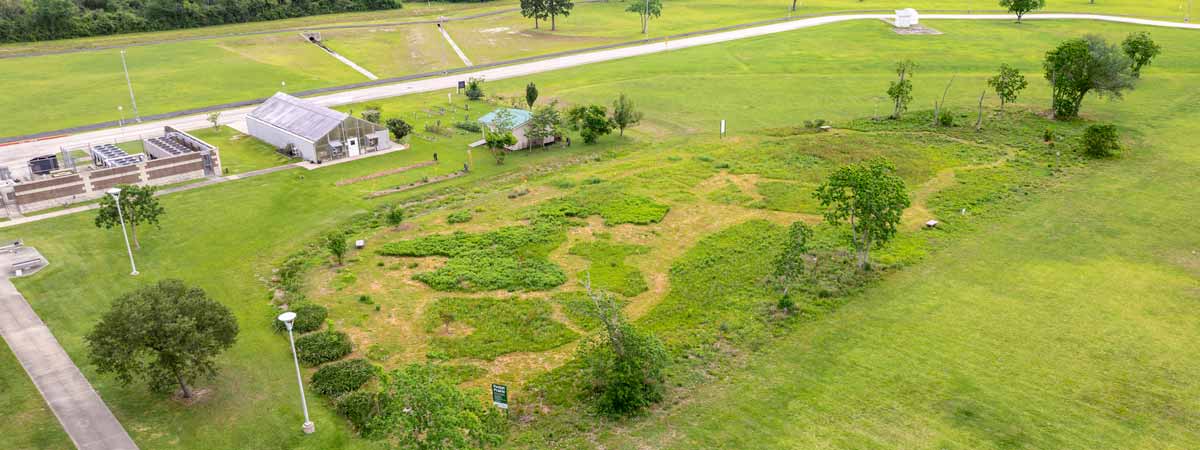
For Heather Lewis, the prairie outside Alvin College’s Science/Health Science Building is more than a patch of land. It is a living classroom, a conservation project and a reminder that nature often knows what it is doing when people give it room to grow.
Lewis, an Alvin College Biology instructor, has been drawn to the natural world for as long as she can remember.
“I have been enthralled with nature since I was a small child,” she said. “I spent my days outside playing in the woods.”
That early love of plants, animals and wildlife eventually led her to study wildlife biology, where conservation became part of both her education and her mindset. Today, that passion is taking root through the Alvin College Pollinator Project, a one-acre pocket prairie designed to support native plants, pollinators, wildlife and student learning.
The project began in 2020 after a donation of milkweed plants from the U.S. Fish and Wildlife Service helped spark interest in doing more. With support from the Alvin College Foundation, Lewis and longtime contributor Dwight Rhodes helped develop the space into a campus pocket prairie. The prairie recently benefited from a $6,000 grant through the Native Prairies Association of Texas Pocket Prairie program, funded by the Houston Livestock Show and Rodeo.
“We initially intended to grow some milkweed in the beginning,” Lewis said. “But then it sort of blossomed from that.”
That growth became especially clear after a March planting event, when more than 70 volunteers helped plant more than 1,000 native plants, remove invasive species and continue restoration work. Soon after, monarch caterpillars were spotted on the newly planted milkweed.
“This was very exciting because it did not take long for the butterflies to find it,” Lewis said.
Recent rains have helped the prairie flourish, with one species growing more than four and a half feet tall. The area now includes at least 29 documented bird species, including nesting bluebirds, and at least five butterfly species, including monarchs and common buckeyes.
For Lewis, those signs of life are proof that the project is doing what it was meant to do.
“When you stroll along the pathway and really observe, you will see the diversity of plants and insects abound,” she said. “It’s extremely rewarding to see the hard work of our volunteers come to life.”
The prairie also gives students a hands-on way to study conservation. Biology students have used the space for photo journals, insect sweeps, plant identification and native seed planting. Some students have also volunteered outside of class to help with maintenance and planting.
The pocket prairie’s impact reaches beyond campus. Native plants provide habitat for pollinators and wildlife, help with erosion control and support local ecosystems. Lewis said homeowners can also play a role by adding native plants suited to local conditions.
“A pocket prairie or pollinator garden is very scalable,” she said. “Even one or two species of native plants is better than none.”
Looking ahead, Lewis hopes the prairie continues to grow in both beauty and purpose. She would like to see more native grasses and wildflowers, fewer invasive plants and a strong volunteer base to help maintain the project.
“This is a wonderful educational opportunity for the students and the community,” she said.
On one acre of campus land, Alvin College is showing that conservation does not always require a massive preserve or distant wilderness. Sometimes, it starts with a small patch of prairie, a few volunteers and someone willing to let the wild things grow.
To learn more about the Pollinator Project and the Pocket Prairie initiative, listen to the Alvin College Podcast.